Run the real app
Codex Desktop lives inside an isolated worker with its own persistent state.
 JustUseCodex
Codex Desktop in a Docker container. Bridge it over HTTP. Keep its native browser, computer use, threads, and free upgrades from OpenAI.
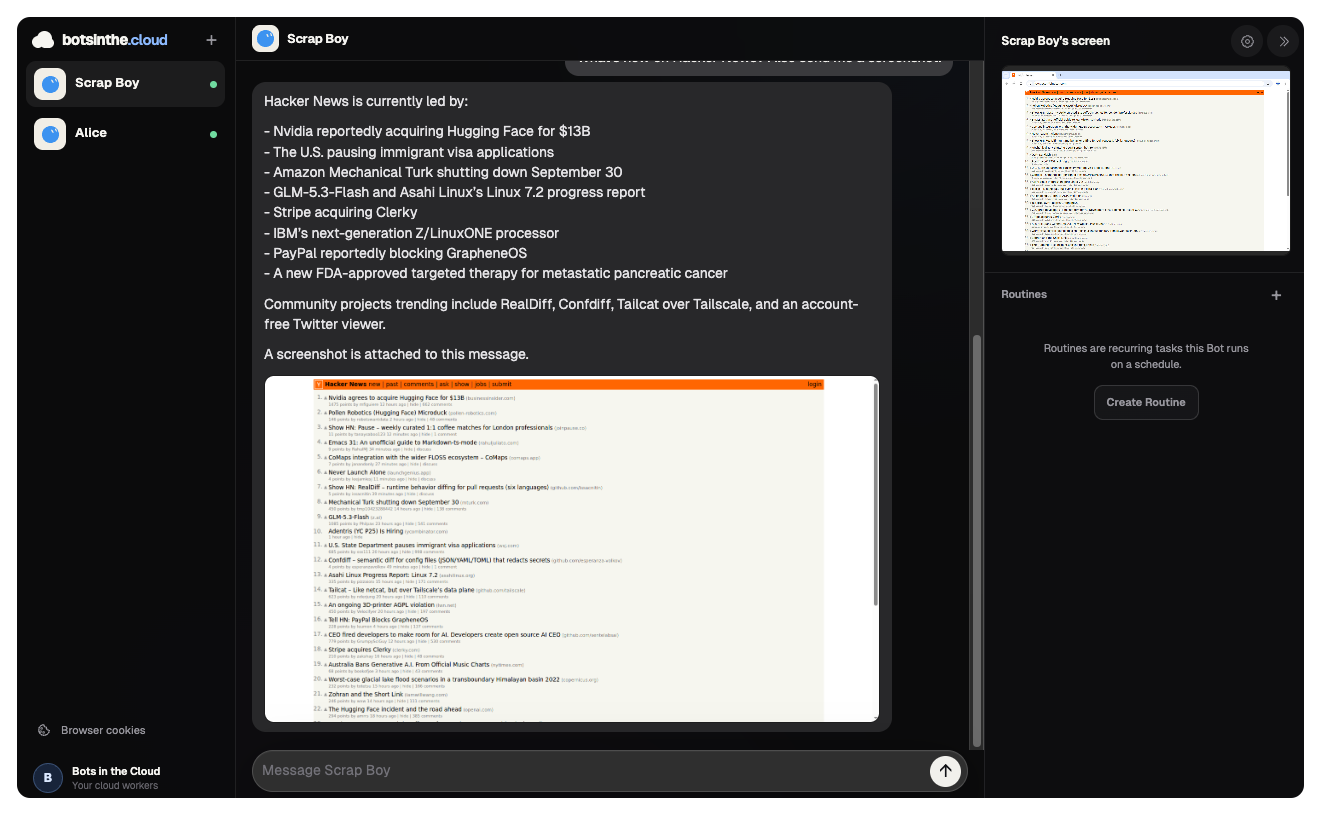

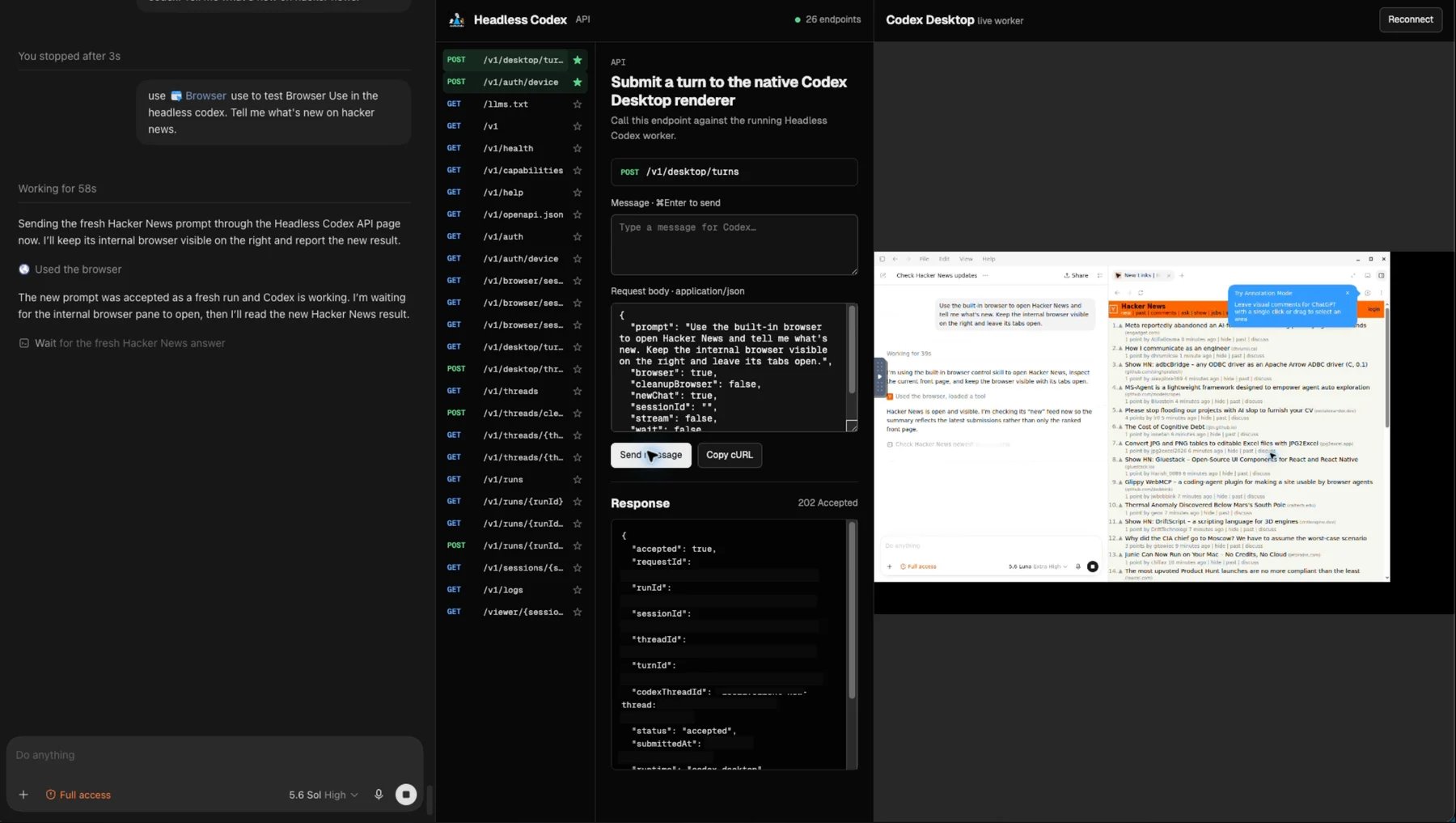
The shortest path to a capable Codex worker is the one that keeps Codex itself in the loop. JustUseCodex wraps the native app in a container and gives your code a straightforward HTTP surface.
Codex Desktop lives inside an isolated worker with its own persistent state.
Send turns, inspect status, manage threads, and invoke the native runtime through one API.
Connect your app, automation, or agent. The browser and computer-use surface come along.

If it can make an HTTP request, it can use your worker. Start a turn with JSON and follow the run until Codex is done.
Check the running Headless Codex worker.
/v1/healthChoose “Send request” to preview the response.
They have an army of engineers and a mountain of GPUs. That annoying missing feature? They'll probably ship it before you finish rebuilding their entire stack.